Where to Buy Backlinks Safely Without Risking Penalties in 2026

Buying backlinks sits in that awkward part of SEO where a lot of people do it, a lot of vendors sell it, and almost nobody explains the risk honestly.
If you have ranked sites before, you already know why people keep paying for links. Good links still move rankings. But the wrong links create patterns that are easy to regret later: irrelevant placements, over-optimized anchors, rented homepage links, recycled guest posts, and seller networks that eventually get flattened.
This guide is about buying backlinks as safely as possible, not pretending there is zero risk. As stated in Google’s Search Essentials, links intended to manipulate rankings are classified as link spam. Google also provides outbound link qualification guidance and warns against large-scale article campaigns built mainly for links.
So the practical goal is simple: avoid links that look manufactured, disposable, and scalable. Buy only where there is real editorial judgment, real topical fit, and real traffic value beyond PageRank.
TL;DR
- Safety First: The safest paid links are those that would still make sense without SEO value (referral traffic, brand visibility, and niche relevance).
- Vetting is Non-Negotiable: Never buy based on DR alone. Check for stable organic traffic, clean outbound link profiles, and topical consistency.
- Avoid Footprints: Steer clear of PBNs, bulk packages, and vendors who sell to unrelated niches (casinos, SaaS, and local dentists) from the same pool of sites.
- Digital PR > Commodity Links: High-end editorial mentions and data-led PR campaigns are the most defensible and effective link-building strategies in 2026.
- Anchor Strategy: Use branded or URL anchors for most paid placements to avoid over-optimization penalties.
Understanding the Risks: Google’s Guidelines on Paid Links
Google’s position is not subtle. If a link exists because money, products, or compensation changed hands and the intent is to influence rankings, that falls under link spam unless handled with the proper attributes. According to Google’s spam policies, buying or selling links for ranking purposes and excessive link exchanges are problematic practices.
That does not mean every paid placement triggers a penalty. In practice, Google often devalues questionable links instead of punishing the whole site. But that is not a safety blanket. If your link profile starts showing repeated footprints such as the same anchor patterns, the same type of sites, unrelated niches, and pages that exist mainly to sell placements, you are giving Google a very clean story to read. Some bad links get ignored. A bad system leaves a trace.
Here is the cleanest way to think about risk:
The part many buyers miss is that penalties are not the only problem. The more common outcome is wasted budget. You pay for placements that look powerful in a spreadsheet, then six months later they pass no meaningful value, get removed, or sit on pages no human ever visits.
A simple decision rule helps here. If the placement would still make sense without SEO value, it is usually safer. If the only reason it exists is to pass authority, the risk jumps immediately.
If a vendor sells the same kind of link to casinos, crypto, essay sites, SaaS startups, and local dentists from the same pool of websites, you are not buying editorial trust. You are renting a footprint.

Anatomy of a Safe Backlink: What to Look For Before You Pay
A safe backlink is not just a high-DR link. That shortcut causes most expensive mistakes in link buying.
You want a placement that looks like something an editor or site owner would reasonably publish for readers of that site. That means checking four things before money leaves your account.
Domain Trust and Authority Metrics
Authority metrics still help, but only as filters.
Look at Domain Rating, Domain Authority, or similar scores the way you would look at a credit score: useful, incomplete, and easy to misuse. A DR 70 site can still be junk if it has no topical consistency, weird outbound links, or a traffic graph that fell off a cliff. A DR 35 site can be a strong placement if it is trusted in a narrow niche and has a real audience.
What I check first:
- Referring domains trend should look steady, not like a giant one-year spike
- Organic keyword footprint should exist beyond branded terms
- Country mix should make sense for the market you target
- Outbound links should not point to every sketchy niche under the sun
- Indexation should be healthy, with fresh pages getting picked up
If a vendor leads with DR and hides traffic, outbound patterns, or sample sites, walk away.
A quick heuristic that saves time: open five recent articles from the site and ask, “Would I be comfortable showing these placements to a client who knows SEO?” If the answer is no, the metrics do not matter.
Strict Topical Relevance
Relevance is where safe link buying usually gets won or lost.
A DR 45 cybersecurity blog linking to a cybersecurity SaaS can help. A DR 75 general blog that also publishes casino reviews, payday loan content, and random appliance articles is far less appealing even if the number looks better.
Topical fit should exist at three levels:
-
Site-level relevance
The whole site broadly covers your subject area. -
Page-level relevance
The article itself is about a topic that naturally supports your link. -
Intent-level relevance
The reader would reasonably want the linked resource next.
This is also where selective partnerships and exchanges can be legitimate. While Google warns against excessive reciprocal linking, relevant editorial links between related sites are a normal part of the web. If two sites genuinely serve overlapping audiences, a contextual collaboration can make sense.
If you need a workflow for finding relevant prospects instead of random sellers, tools like Rankchase can help narrow partner discovery using signals such as niche relevance, DR, traffic patterns, and spam indicators. That is much safer than buying from generic lists where relevance is an afterthought.
Consistent Organic Traffic
A good site usually leaves a traffic fingerprint.
I am less interested in the exact monthly estimate and more interested in the pattern:
- Is traffic stable or growing?
- Did it collapse after a known update and never recover?
- Does the site rank for many relevant terms, or one weird page carrying the whole domain?
- Are new pages attracting search traffic, or is the site coasting on old authority?
A link on a dead site is often a future loss, even if it still looks decent today.
Also check whether the page you are buying onto gets traffic or has the potential to. Sellers love pushing “existing aged pages” that have authority but no readers. If the page ranks for nothing, gets no visible internal links, and sits buried in an archive, you are paying for a line of HTML.
Contextual Placement and Natural Anchor Text
The safest backlink is woven into content where it genuinely helps the reader continue.
That means contextual placement inside the body, near relevant supporting text, using an anchor that sounds normal. Not forced. Not exact-match jammed in the middle of a sentence. Not a footer. Not an author bio. Not a “resources” block with ten commercial anchors.
Use this anchor rule:
- Branded or plain URL anchors for most paid or semi-controlled links
- Partial-match anchors sparingly
- Exact-match anchors only when they read naturally and you already have a diversified profile
If a vendor promises “anchor text control” as the main selling point, be careful. Strong editorial links rarely feel engineered around exact keyword placement.
Safe vs. Risky Link Types: What Works Right Now
Once you know what a safe backlink looks like, the next question is what kind of link you should even buy.
Not all paid links carry the same risk profile. Some methods are expensive but defensible. Others are cheap because they are easy to scale and easy for Google to distrust.
The Safest Options: Digital PR and Editorial Placements
If your goal is to stay on the safest end of the spectrum, digital PR and genuine editorial placements are the best options.
These are links earned by giving publishers something worth covering: original data, expert commentary, a strong founder story, a useful tool, a timely reaction, or a genuinely strong piece of content. This aligns best with Google’s helpful content guidance because the asset exists to serve users first.
Why these links are safer:
- There is real editorial choice
- The sites usually have audiences, not just metrics
- Anchor text is naturally varied
- The placements often drive brand searches and referral traffic
- They support both classic rankings and broader authority signals
This matters more now because search results increasingly reward brand authority and citation-worthy content, not just raw link volume. Strong editorial mentions also help your site show up in AI-generated search experiences because those systems lean on recognizable entities and trusted sources. You should evaluate if paid editorial backlinks on major tech platforms are worth the investment for your brand's visibility. Modern research on generative search optimization confirms that machine-readable authority and earned media visibility are key factors.
The downside is cost and unpredictability. You may spend on campaign development before you know exactly which links will land. But when this works, the links usually age well.
Moderate Risk: Niche Edits and Paid Guest Posts
This is where most commercial link buying happens.
Niche edits place your link into an existing article.
Paid guest posts publish a new article that includes your link.
Both can work. Both can also go wrong quickly.
A good paid guest post has these traits:
- The site publishes for a real audience
- The article fits the publication’s existing topics
- The content is original and useful
- The link supports the article naturally
- The vendor is selective, not “anything goes”
A good niche edit works best when the existing page already ranks, already gets traffic, and your link genuinely improves the article.
Where buyers get burned:
- Articles are written only to host links
- Sites sell too many placements per month
- Anchors are too commercial
- Publishers are niche-incompatible
- The page gets no traffic and no internal support
- The vendor rotates through the same database every client gets
As Google warns in its reminder about large-scale article campaigns, scaled guest posting for link acquisition is a risky tactic.
My rule here is simple. If you buy guest posts or niche edits, keep them selective, relevant, and mixed into a broader acquisition strategy. If 80 percent of your new referring domains come from obvious paid insertions, you are building a pattern, not a profile.
High Risk: PBNs, Link Farms, and Cheap Bulk Packages
This is the part you should avoid unless you are knowingly gambling on a disposable site.
PBNs, link farms, and bulk packages are dangerous because their entire business model is manipulative scale. The footprints vary, but the pattern is always familiar:
- Thin or generic sites
- Recycled content
- Unrelated niches
- Huge outbound link volume
- Obvious “write for us” or pricing pages
- Sudden authority with weak brand presence
- Networks of sites using the same templates, hosting, or linking behavior
Cheap packages are not cheap if you later need a cleanup, lose momentum, or contaminate your anchor profile.
And yes, some people still get short-term wins from these tactics. That does not make them safe. It just means the market still rewards risk in some cases. If the site matters long term, this is the wrong game.
Where to Buy Backlinks Safely: 4 Reliable Sources
If you still plan to buy backlinks, buy from sources where editorial standards are visible and the process is not purely transactional.
1. White-Hat Digital PR Agencies
These are usually the safest providers because they are selling campaigns and media angles, not link inventory.
A good digital PR agency will ask about your data, product differentiators, founder expertise, and content assets. They will pitch publications or journalists based on relevance and story fit. You may not control the anchor text or the exact page, but that tradeoff is usually a feature, not a bug.
Buy here when:
- You need authority links in a competitive niche
- Your brand has something genuinely worth pitching
- You care about PR value, referral traffic, and reputation alongside SEO
Do not buy here if you expect a neat spreadsheet of guaranteed dofollow links on exact dates. That is not how the best PR-driven work behaves.
2. Specialized Link-Building Services
This category includes agencies and boutique providers that source guest posts, niche edits, and outreach placements.
Good ones exist, but this is where vetting matters most. The better providers will give you sample sites, explain their sourcing process, and verify white-hat services are legitimate before you commit. They should also help you detect bait-and-switch services that often mask low-quality fulfillment.
A practical buying workflow:
- Ask for 10 recent placements in your niche or adjacent niches
- Check whether those sites have real traffic and clean outbound profiles
- Review the actual article pages, not just root domains
- Ask whether links are permanent, sponsored, or subject to change
- Start with a small test batch before committing monthly budget
If the vendor refuses samples, hides URLs until payment, or says “all our sites are premium” without proof, skip them.
3. High-End Content Marketing Firms
These firms are useful when you want backlinks as a byproduct of content quality, not as the only outcome.
They tend to build linkable assets: original studies, statistics pages, calculators, visual data pieces, expert roundups, and opinion-led resources that deserve outreach. This often blends content strategy with manual promotion.
This source is strong if your site has weak link magnet assets today. In many niches, the reason outreach underperforms is not outreach. It is that the target page is not worth citing.
I often prefer this route for B2B, SaaS, and specialist sites because it creates a cleaner long-term system:
- stronger assets
- safer outreach
- better editorial acceptance
- more natural anchor mix
It also supports your organic content quality, which aligns with Google’s helpful content guidance.
4. Vetted Link Marketplaces
Marketplaces are the most mixed category.
Some are junk. Some are usable if you treat them as discovery tools, not one-click link vending machines. You should evaluate if link building marketplaces are still worth it for your specific niche and goals.
The safest way to use a marketplace is to filter aggressively and manually verify every prospect. You are not looking for volume. You are looking for a shortlist of sites that would be respectable outreach targets even if the marketplace did not exist.
Use these filters before you buy anything:
- real niche overlap
- stable organic traffic
- clean outbound links
- editorial-looking content
- no obvious “sell links to anyone” pattern
- traffic from countries relevant to your business
- pages indexed and updated recently
This is also where relevance-driven partner discovery platforms can help. A system that surfaces sites using topical fit, traffic patterns, and spam signals is inherently safer than buying blind from a giant inventory database. But automated filtering should still be followed by manual review.
How to Evaluate a Link Vendor to Avoid Penalties
This is the section that saves the most money.
A polished sales deck tells you almost nothing about actual risk. What matters is the vendor’s sourcing behavior and the sites they repeatedly place on.
Use this vendor screen before you buy:
Quick vendor checklist
- Can they show recent live placements?
- Are those sites topically relevant?
- Do the sites have real traffic trends?
- Do sample pages read like normal editorial content?
- Are outbound links selective and clean?
- Do they avoid exact-match anchor pushing?
- Can they explain how sites are sourced?
- Will the links remain live long term?
Then ask five questions directly.
1. How do you source sites?
You want to hear outreach, relationships, editorial pitching, content partnerships, or selective marketplace sourcing with manual review. You do not want to hear “proprietary inventory” with no explanation.
2. Can I reject placements before they go live?
If the answer is no, you are accepting blind risk.
3. How many outbound paid placements does a typical site publish each month?
Few vendors answer this well, but the question itself is revealing.
4. What anchor text mix do you recommend?
Good vendors talk about branded, URL, and natural partial-match anchors. Weak vendors push exact match because it sounds powerful.
5. What happens if a link is removed?
You need to know whether the placement is permanent, guaranteed for a period, or effectively rented.
Red flags I take seriously:
One more thing that experienced buyers watch closely: site overlap across vendors. Many sellers are reselling the same inventory. If you work with multiple agencies and keep seeing the same domains, your profile can get more synthetic than you realize.
How Much Do Safe, High-Quality Backlinks Actually Cost?
Safe backlinks are expensive because scarcity is the whole point.
If a link is easy to buy, thousands of other people can buy it too. That lowers editorial value and raises footprint risk. Understanding how much backlinks cost is essential for planning a sustainable SEO budget.
According to Adsy's analysis of guest post pricing, paid niche edits typically cost in the low hundreds, while premium English-market placements are materially more expensive. Recent trends show that backlink price inflation is driven by stricter search scrutiny and the need for higher quality. You might also wonder why backlink prices increased so significantly in late 2025 due to these market shifts.
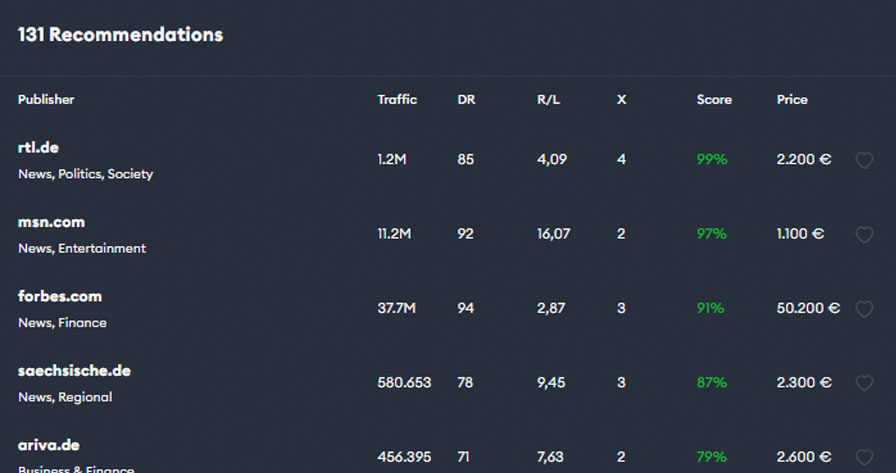
A realistic budgeting view:
The price itself does not tell you whether the link is good. But very low prices usually tell you something important: the site owner has made publishing links operational and repeatable.
What a serious buyer should budget instead:
- Small local site in a light-competition niche: a few high-quality placements plus stronger on-site content
- B2B SaaS or national service site: ongoing monthly link acquisition from selective sources
- High-competition niches like legal, finance, health, gambling: premium placements, heavier PR, and much tighter vetting
If your budget is under pressure, buy fewer links and raise the quality bar. That almost always beats stretching budget across mediocre domains.
How Many Premium Backlinks Do You Need to Rank?
Usually fewer than people think, but they need to be the right links.
You do not need 100 premium backlinks to move a page if competitors are winning on a small number of relevant, authoritative referring domains. In practice, the answer comes from gap analysis, not guesswork.
Here is the workflow I use:
- Pull the top 5 ranking pages for your target term
- Compare referring domains to the page, not just the domain
- Check the quality and topical fit of those links
- Look at anchor patterns and content type
- Estimate the minimum number of strong links needed to become competitive
A common pattern:
- If the top pages have 5 to 10 highly relevant linking domains, you may only need a handful of strong placements plus better content
- If they have 20 to 40 strong page-level links, you need a campaign, not a one-off purchase
- If the SERP is dominated by major brands, links alone will not close the gap
This is where intermediate SEOs often waste money. They buy links before checking whether the page itself is link-worthy, whether search intent is matched, and whether internal linking is helping enough.
So ask this before buying more links:
- Is the page already good enough to deserve ranking?
- Does it satisfy the query better than what is above it?
- Have I fixed internal links, content depth, and entity support?
- Am I chasing page-level competitiveness or domain-level authority?
For many pages, 3 to 8 excellent links will outperform 30 forgettable ones.
Safer Alternatives to Direct Link Purchasing
If direct paid placements feel too risky for your brand, you have better options than doing nothing.
The safest alternatives usually combine editorial value with relationship building.
First, build linkable assets that deserve citations. Original surveys, internal data studies, comparison pages, free tools, templates, and genuinely useful resources give outreach something to work with.
Second, use digital PR. Expert commentary, reactive pitching, and proprietary data remain among the most defensible ways to grow authority.
Third, build relevance-driven partnerships. This can include co-marketing, joint research, podcast swaps, webinar partnerships, supplier pages, case studies, and selective content collaborations. Relevant editorial links between related businesses happen naturally all the time. The problem is not collaboration itself. The problem is turning it into a scaled exchange scheme.
Fourth, improve brand mention capture. If people already cite your brand without linking, ask for the link. These are often some of the cleanest links you can get because the editorial interest already exists.
Fifth, systemize partner discovery. Instead of buying random placements, build a list of niche-aligned sites where a collaboration would make business sense. That is exactly where a tool like Rankchase can fit into the workflow, especially if you want to filter for relevance and site quality before outreach starts.
If you want one safer stack, use this:
- one strong linkable asset per quarter
- monthly PR or expert outreach
- selective partner collaborations in adjacent niches
- occasional high-quality editorial guest contributions
- no bulk buying, no recycled lists
That mix is slower, but it compounds better and leaves a cleaner profile.
Frequently Asked Questions About Buying Links Safely
Can buying links completely ruin my site's SEO?
Yes, if you do it recklessly enough.
A handful of carefully selected placements usually will not destroy a site overnight. But aggressive paid link building can absolutely create long-term ranking problems. As explained in Google’s spam policies, manipulative link schemes are a violation of their guidelines.
The bigger practical risk for most sites is slower growth, wasted spend, and a backlink profile that becomes harder to trust over time.
How do paid backlinks impact AI search results?
Paid backlinks can help indirectly if they place your brand on trusted, relevant sites that strengthen authority signals, citations, and discoverability. They can hurt if they come from weak sites that add no reputation value.
AI search systems tend to favor sources that look credible, well-cited, and consistently referenced across the web. Modern research on generative search optimization emphasizes source authority and earned media visibility as critical factors.
If your only goal is “link juice,” you are thinking too narrowly for where search is headed.
Is there a 100% penalty-free way to buy links?
No.
There are safer ways, but not a fully risk-free way to buy links for ranking purposes. Google’s outbound link qualification guidance is clear that paid links should be qualified with rel="sponsored" or rel="nofollow". You should also be cautious of the truth about institutional links like .edu and .gov, as they are often sold as "safe" shortcuts but carry their own set of risks.
If you want the closest thing to low-risk, spend money on:
- digital PR
- high-quality content assets
- expert-led outreach
- relevant partnerships with real editorial logic
That is not the fastest route to a spreadsheet full of dofollow links. It is the safest route to links you will still be happy with a year from now.