Why Did Backlink Prices Increase in Late 2025?

Backlink prices did not rise in late 2025 because sellers suddenly got greedy. Prices moved because good links became harder to source, easier to evaluate, and more important to justify.
That combination changed the market.
If you build links for real businesses, you probably felt it in three places at once. Fewer sites were worth buying from. More clients wanted links on pages that could actually rank and send signals. And the amount of filtering needed before placement went up.
Late 2025 pushed link building further away from volume and closer to editorial selectivity. That is why mediocre placements got squeezed, while relevant, trusted placements got more expensive.
This article breaks down what actually changed, what still drives pricing no matter the year, and how to avoid overspending on links that look good in a spreadsheet but do very little in the SERP. For a broader view on acquisition, learn where to buy backlinks safely without risking penalties.
TL;DR
- Editorial Selectivity: Prices rose because the market now prioritizes links that survive stricter search scrutiny, shifting away from low-quality volume.
- AI and Generative Search: The expansion of AI Overviews and AI Mode has increased the value of brand-level credibility and trusted topical sources.
- Topical Authority: Niche-relevant inventory is more expensive because contextual fit now carries more weight than raw domain metrics.
- Google's Evolution: As explained in Google’s link schemes guidance, manipulative patterns are easier to detect, making safe, high-quality placements a premium commodity.
- Budgeting for 2026: Success requires a shift from tracking link counts to measuring page-level ranking movement and strategic contribution.
The Current State of Backlinks in Modern SEO
Are Links Still a Crucial Ranking Factor Today?
Yes. Links still matter because they help search engines evaluate credibility, discoverability, and relative prominence across the web. Google has not moved away from links. It has become better at deciding which links deserve weight and which ones should be discounted. Google’s spam policies still call out manipulative link schemes, including excessive link exchanges and paid links that pass ranking signals, while its broader ranking documentation continues to treat helpful, reliable content and site signals as part of the evaluation mix.
That distinction matters. Many site owners misread modern SEO and assume links became optional because content quality and on-page optimization improved. In practice, content gets you into the race and links often decide whether you move from page two to page one, especially in competitive commercial SERPs.
The links that still move rankings usually share a few traits:
- They come from pages that are indexed, crawled, and updated
- The linking site has a real audience or real topical alignment
- The page is not bloated with unrelated outbound links
- The link sits inside content that makes editorial sense
- The destination page is genuinely worth citing
If you want a simple decision rule, use this one:
If a link would still be worth getting even if Google ignored the anchor text, it is probably the kind of link you should be looking at.
That is a useful filter because modern link value is less about raw link count and more about whether the placement fits the web naturally.
Why High-Quality Links Matter More Than Ever
High-quality links became more valuable because low-quality links became easier to ignore.
Google has spent years improving how it handles spam and manipulative linking patterns. Its own documentation says paid links should be qualified properly, and that rel="sponsored" is the preferred attribute for paid placements, with nofollow still acceptable in many cases.
At the same time, search results now surface more synthesized answers and AI-assisted experiences, which means ranking opportunities are consolidating around pages that look especially trustworthy and complete. Google has expanded AI Overviews and AI Mode, while emphasizing that helping users discover web content remains central to Search. It has also described AI Mode as using query fan-out techniques to pull together broader sets of relevant content.
For link builders, that creates a clear market effect. When fewer placements are likely to help, the shortlist of placements that can help gets bid up.
In real campaigns, this changes how you evaluate a target site. A DR metric alone is not enough. You also want to ask:
- Does this site publish consistently in the topic?
- Do its pages earn branded searches or references?
- Are new articles indexed normally?
- Does the site link out like an editor or like a broker?
- Would I be comfortable showing this placement to a skeptical client?
That last question matters more than people admit. Many overpriced links are not bad because they are toxic. They are bad because they are defensible only until someone looks closely.
Primary Drivers Behind the Late 2025 Backlink Price Surge
Google's Core Updates and Stricter Link Valuations
Late 2025 pricing was shaped by a simple market truth. When Google gets better at valuing links selectively, buyers pay more for links that survive scrutiny.
Google’s current documentation still folds helpful content into its core ranking systems and continues updating spam and site reputation guidance. That does not mean every core update directly targeted backlinks. It means the overall evaluation environment got tougher, and weak sites had less room to coast.
Here is how that played out in the market:
- Buyers became less willing to pay for generic placements on sites with messy topical coverage.
- Sellers with genuinely strong sites increased rates because they had more demand.
- Agencies added more vetting work before approving a placement.
- Clients asked harder questions about relevance, traffic quality, and page context.
That extra scrutiny pushed costs up even before a link was purchased.
A practical example:
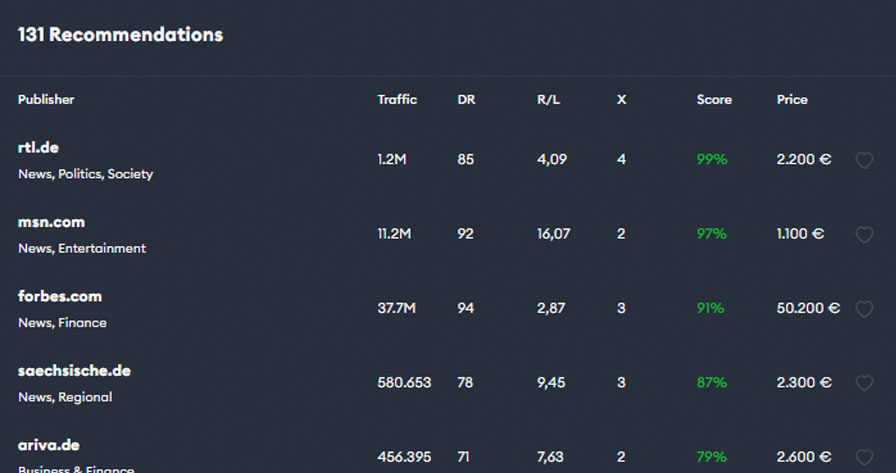
If two sites both have similar authority metrics, but one has clean topical focus, stable organic traffic, and restrained outbound linking, that site became much more expensive in late 2025 because it was one of the few options everyone could agree was safe enough to use.
The Growing Impact of AI and Generative Search
AI did not kill link building. It changed which links feel worth paying for.
As Google expanded AI Overviews and AI Mode through 2025 and into early 2026, it kept reinforcing a model where search can synthesize answers while still drawing from credible web content. Google has explicitly said AI Mode uses broader query fan-out to uncover relevant sources and that web content remains central to the experience.
That has two budget implications.
First, brand-level credibility matters more. A mention or link from a trusted topical site can support visibility beyond a narrow keyword target because it contributes to how your brand is associated with a topic.
Second, mid-tier links got squeezed. A random placement on a semi-relevant blog with weak readership is harder to justify when search results increasingly reward sources that look authoritative and complete.
So buyers shifted toward links that do one of these jobs well:
- Reinforce topical expertise
- Support entity association
- Send qualified referral traffic
- Sit on pages that can rank and remain indexed
- Put the brand in a context that feels editorially earned
That shift did not reduce prices. It concentrated budgets into fewer, stronger placements.
The Industry Shift Toward Topical Authority and Entity SEO
This was the biggest strategic shift behind the late 2025 price increase.
For years, many campaigns chased authority metrics first and relevance second. That ordering got weaker. Topical fit now carries more weight in practical link decisions, especially for sites trying to build subject depth rather than inflate domain-level metrics.
Entity SEO made this more obvious. If you want Google to understand your brand as a credible player in a topic, random links from unrelated sites do much less than a smaller number of links and mentions from contextually aligned publishers.
That is why niche-relevant inventory got expensive.
A finance SaaS site can still buy a general business link. But if it gets a chance to earn or place a link on a site that regularly covers accounting workflows, CFO operations, or B2B finance software, that placement is usually more valuable and more expensive because the contextual fit is stronger.
A quick workflow that reflects how experienced teams now buy links:
This is also where tools that help surface niche-relevant opportunities save time. If you are trying to find collaboration or mention opportunities without trawling through junk inventory, Rankchase can help narrow the field using relevance, authority, traffic patterns, and spam-related signals. That does not replace human review, but it reduces the amount of bad inventory you have to sort through.
Evergreen Variables That Shape Link Building Costs
Late 2025 added pressure, but the core pricing variables are still the same. If you have bought links for a while, you have seen these four factors determine price more consistently than any trend cycle.
Publisher Authority, Trust, and Traffic Metrics
The most expensive placements usually combine authority, trust, and believable traffic.
Authority metrics matter because the market uses them as shorthand. But trust signals are what stop you from overpaying. A site with decent authority numbers can still be a poor purchase if its traffic is unstable, its pages are thin, or its outbound patterns look commercial in the worst way.
When reviewing a publisher, check three layers:
Layer 1: surface metrics
Look at DR, referring domains, ranking keywords, and estimated traffic. These do not make the decision, but they tell you whether deeper review is worth the time.
Layer 2: traffic quality
Open the site’s top pages. Are they relevant to the niche? Is traffic concentrated on weird, unrelated pages? Did the site spike and collapse? A site whose traffic comes from one accidental viral page is not priced the same as a site with broad, stable topic coverage, even if the tools make them look similar.
Layer 3: trust pattern
Check recent articles and outbound links. If every post contains commercial anchors to unrelated industries, the site is monetized too aggressively. That lowers the real value of any placement, no matter what the headline metrics say.
A simple rule I use: if the site looks stronger in Ahrefs than it looks in a manual review, price it down mentally by at least 30 to 50 percent.
Industry Competitiveness and Niche Difficulty
Some niches have expensive backlinks because the SERP is crowded with sophisticated teams. Others are expensive because there are simply not many publishers worth approaching.
These are different problems.
Legal, finance, gambling-adjacent, health, cybersecurity, and B2B SaaS often cost more because buyers compete aggressively and publishers know it. Hyper-specialized manufacturing or technical B2B niches can also get expensive, but for the opposite reason. Supply is tight.
This gives you a budgeting rule:
- In broad, competitive niches, expect price inflation from demand
- In narrow expert niches, expect price inflation from scarcity
If you are planning a campaign, do not average your cost targets across all link types. Build budget bands by niche.
For example:
- General lifestyle placement: lower strategic value, easier inventory
- Relevant business publication: mid to high value
- Tight niche trade site: often highest value per link, even if the metrics look modest
That last category is where many teams underinvest. A relevant niche site with modest authority can outperform a bigger but looser publication because it sends cleaner topical signals.
Content Production and Placement Complexity
Link cost is not just the placement fee. It is the cost of making the placement publishable.
A cheap placement can become expensive when you need:
- Original data
- Expert review
- Editorial rewrites
- Compliance approval
- Product screenshots or custom visuals
- Deep subject matter input
- Multiple rounds of negotiation
This is why guest posting budgets vary so widely. One placement might require a 700-word article that any decent writer can handle. Another might need a founder quote, proprietary stats, and an editor who rejects anything that sounds remotely SEO-driven.
If you want a realistic pre-buy calculation, split the cost into four parts:
- Prospecting and qualification
- Negotiation
- Content production. If you are targeting high-authority sites, you need to know how to get guest posts that actually meet editorial standards.
- Placement fee
Many teams only price number four, then wonder why link acquisition becomes chaotic.
Page Exclusivity and Outbound Link Ratios
This factor quietly drives price more than most people realize.
A link on a page with restrained, editorial outbound linking is worth more than a link on a page that exists mainly to sell placements.
You should care about two things here:
Page exclusivity
Will your link appear in a piece that was clearly created for one topic and one audience, or will it sit inside a multi-purpose commercial article that keeps changing?
Outbound link ratio
How many external links are on the page, and how many of them feel transactional?
You do not need a perfect number, but you do need common sense. If a 1,000-word article contains eight commercial external links across unrelated brands, your share of that page’s value is diluted.
A good placement should feel like a recommendation inside a real article, not a parking lot for anchors.
How Different Link Types Impact Your Budget
DoFollow vs. NoFollow and Sponsored Attributes
This is where many budgets go sideways.
A lot of buyers still treat DoFollow as the only thing worth paying for. That is too simplistic. From Google’s documentation on qualifying outbound links, paid links should be qualified, with rel="sponsored" preferred and nofollow still acceptable in many cases. Google also notes that links with these attributes may still be discovered through other means, even though they are generally not followed in the normal way.
So the budget question is not just “Is it DoFollow?”
It is:
- Is this a paid placement that should be disclosed?
- Does the link still create brand, referral, or entity value?
- Is the site one I actually want association from?
- Is the editorial context useful even without direct ranking transfer assumptions?
In practice:
- DoFollow editorial links usually command the highest prices
- Sponsored qualified links can still be valuable for visibility, trust, and audience fit
- NoFollow links are often underpriced by buyers when they appear on excellent pages with real readership
If you are allocating budget, do not throw out every nofollow or sponsored opportunity by default. Throw out the weak context. Keep the strong context.
Guest Posting vs. Niche Edits (Link Insertions)
Guest posts and niche edits hit the budget differently because the labor profile is different.
Guest posting usually costs more in time because you need topic approval, content creation, revisions, formatting, and editorial fit. But you also get more control over angle, anchor placement, and destination relevance.
Niche edits can be faster because the page already exists and may already rank or carry link equity. That makes them attractive. But they become poor value quickly if the insertion feels bolted on, the page is stale, or the site has started stuffing old articles with commercial anchors.
Here is the practical split:
My default rule is simple:
- If the existing page already ranks and the insertion reads naturally, a niche edit can be efficient
- If the page is weak, old, or only loosely related, pay for a fresh guest contribution instead
Manual Outreach vs. Buying Links: The Cost Divide
The Hidden Expenses of Organic Link Acquisition
People often compare “earned links” and “bought links” as if one is free and the other is expensive. In real campaigns, manual outreach is rarely cheap.
Even when you do not pay for placement, you still pay for:
- Prospecting time
- Contact discovery
- Outreach tools
- Follow-ups
- Rejected pitches
- Content assets
- Writer and strategist hours
- Relationship maintenance
Aira’s State of Link Building report continues to show that demand for link building and budgets remain strong, which matches what many practitioners see on the ground: earning quality links takes sustained work, not just a few outreach emails.
If your internal team spends 20 hours to land one decent editorial link, that link was not free. It may still be worth it, but you need to cost it honestly.
A rough mini-workflow for pricing outreach:
- Estimate outreach and strategist hours
- Add content asset costs
- Add tool costs
- Divide by realistic close rate, not optimistic send volume
- Compare that effective cost to a vetted direct placement
That comparison often surprises people.
Why Outdated, Cheap Link Tactics Are Now Too Risky
Cheap links got riskier because they are easier to pattern-match and easier to regret.
Google’s spam policies explicitly call out paid links that pass ranking credit and excessive link exchanges done mainly for cross-linking. It also continues to encourage proper qualification of paid and user-generated links.
That does not mean every collaboration or reciprocal mention is bad. The web naturally includes relevant cross-references between related sites. The problem starts when the pattern becomes excessive, irrelevant, or obviously transactional.
Cheap tactics usually fail in one of four ways:
- The site gets devalued
- The page never gets indexed properly
- The link sits in junk context and does little
- The footprint becomes embarrassing during a manual review
This is why bargain link lists are so dangerous. The issue is not just penalty fear. The issue is capital misallocation. You spend budget, report activity, and get no durable search benefit.
The Benefits of Direct Placement Purchases
Direct placement purchases can make sense when they reduce waste.
That sounds obvious, but it matters. If you can identify a site that is relevant, trusted, contextually aligned, and open to a legitimate editorial collaboration, paying for that access may be more efficient than months of cold outreach.
The benefit is not “buying ranking power.” The benefit is buying workflow efficiency and placement certainty.
Done carefully, direct placements help you:
- Control the target page and topic
- Reduce outreach overhead
- Improve forecasting
- Build links on pages that fit a planned cluster
- Avoid the churn of low-response prospecting
The mistake is treating direct purchase as a substitute for judgment. It only works when the site passes review and the placement makes editorial sense.
A short buyer checklist:
- Is the site topically relevant?
- Does it have stable, believable organic visibility?
- Are outbound links selective?
- Will the article still make sense six months from now?
- Would I buy this if the authority metric were hidden?
If you answer “no” to two of those, skip it.
How to Maximize Your Link Building ROI Moving Forward
Prioritizing Link Quality Over Quantity
The easiest way to waste budget in 2026 is to chase monthly link quotas.
Quality-first link building sounds obvious, but many teams still report success by count because it is easy to show. Rankings do not care how pretty the monthly total looks.
A better model is to score opportunities by expected strategic contribution:
- Topical relevance
- Likelihood of indexation
- Editorial fit
- Page quality
- Referral potential
- Brand legitimacy
Then buy fewer links and push harder on the pages that matter.
If you are working with a fixed budget, try this split:
- 60 percent on high-confidence placements
- 25 percent on relationship-driven or collaboration-driven opportunities
- 15 percent on testing new publishers or formats
That structure keeps you from burning the whole budget on speculative inventory.
Evaluating Donor Site Reputation Effectively
Do not evaluate donor sites only at the domain level. Review the site, the section, the page type, and the recent outbound behavior.
A practical review sequence looks like this:
Step 1: Scan the domain
Check topical consistency, estimated traffic trend, and whether the site still looks actively maintained.
Step 2: Open recent content
Look at the last 10 to 15 posts. Are they coherent, or are they swinging from VPNs to pet insurance to crypto wallets?
Step 3: Inspect commercial linking behavior
If every article contains keyword-rich brand anchors, the site is probably overselling.
Step 4: Review indexing and page quality
Search for recent titles and confirm the pages are actually discoverable. If new content struggles to appear, your placement may not carry much weight.
Step 5: Check relevance at page level
Even a strong domain can host a weak article. Buy the page, not just the logo.
Here is a fast red-flag table you can use during vetting:
Building a Sustainable Backlink Budget
A sustainable budget is one you can defend quarter after quarter.
That means planning for three buckets, not one:
-
Core authority building
High-confidence placements on relevant publications -
Partnership and collaboration opportunities
Selective exchanges, mentions, co-created assets, and industry relationships that make sense editorially -
Content support costs
Writers, editors, research, visuals, and internal review
This is where many teams underbudget. They reserve funds for placements and ignore the work needed to make those placements effective.
If you want a simple budgeting formula, start here:
- Set a quarterly target based on the business value of the pages being supported
- Assign higher budgets to revenue-linked page clusters, not vanity pages
- Leave room for one or two premium opportunities instead of flattening spend across too many average links
- Reassess every 90 days based on rankings, referral value, and assisted conversions
If your link budget is always being cut, the issue is usually not cost alone. It is that the program is not tied tightly enough to outcomes.
Final Thoughts on Navigating Link Prices
Backlink prices increased in late 2025 because the market put a premium on links that still hold up under modern search scrutiny.
Google’s evolving search environment, stronger spam enforcement, and AI-assisted discovery features all pushed buyers toward better placements and away from disposable ones. Google’s spam policies continue to evolve, making quality the only sustainable path.
That is frustrating if you want cheap volume, but it is useful if you care about ROI. The expensive part of link building is not the invoice. It is paying for links that never had a real chance to help.
If you approach link acquisition with tighter relevance standards, better donor review, and a budget built around outcomes instead of raw counts, rising prices become easier to manage. You may buy fewer links, but the links you keep are far more likely to matter.